


How to Stop Dog Aggression on Walks: A Master Trainer’s 2026 Guide
Updated: Jun 12
Your dog's leash aggression isn't a sidewalk problem; it's a leadership gap that starts before you even step through the front door. You've felt the social embarrassment of a lunging dog and the physical strain of a walk that feels more like a wrestling match. Beyond the frustration, the fear of a bite incident is a constant weight on your shoulders. In New Jersey, owners face strict liability for damages regardless of the dog's history. This makes every reactive outburst a serious legal and financial risk that you cannot afford to ignore.
You shouldn't have to plan your life around off-peak hours just to avoid the neighbors. You can stop dog aggression on walks and regain your confidence as a handler. This guide provides the professional roadmap you need to transform these chaotic outings into disciplined, calm experiences. By addressing the root causes of leash reactivity and implementing proven behavioral modification techniques, you'll build a deeper bond of trust with your pet. We will preview the shift from reactive to proactive leadership, the role of specialized Aggression Rehabilitation from I Wuff You Dog Training, and how professional tools like the Dogtra E-Collar can restore safety and sanity to your daily routine.
Key Takeaways
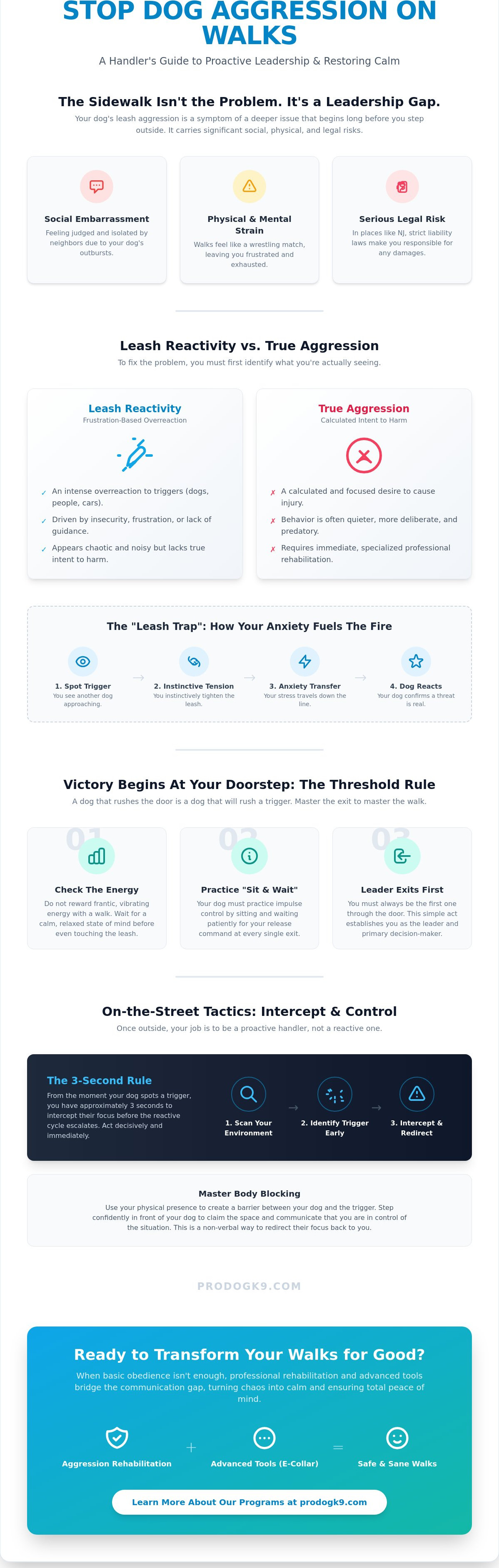
Distinguish between leash reactivity and true aggression to understand the root cause of your dog’s behavior. Identify how the "Leash Trap" transfers your own stress directly to your pet.
Establish immediate leadership at the front door using the "Threshold Rule." A calm departure is the foundation for a disciplined outing.
Apply the "3-Second Rule" and body blocking techniques to stop dog aggression on walks when encountering neighborhood triggers. Learn to scan your environment and intercept reactive cycles before they escalate.
Discover how specialized Aggression Rehabilitation and professional tools like the Dogtra E-collar bridge the communication gap. Transition from basic obedience to advanced control for total peace of mind.
Table of Contents
Understanding Leash Reactivity vs. True Aggression
To effectively stop dog aggression on walks, you must first identify what you're actually seeing. Most owners mislabel every lunge or bark as "aggression," but there's a vital distinction between a dog that wants to bite and one that simply doesn't know how to handle restraint. Leash reactivity is an overreaction to environmental triggers, such as other dogs, bikes, or cars, specifically while the dog is restrained by a lead. Leash aggression is a distance-increasing behavior driven by insecurity or a lack of guidance from the handler.
You might be unknowingly triggering your dog through the "Leash Trap." When you spot a distraction and instinctively tighten your grip, that physical tension travels directly down the line. Your dog feels your heart rate spike and your muscles lock, which signals that a threat is imminent. This creates a dangerous feedback loop of anxiety. Understanding Leash Reactivity involves recognizing that frustration-based lunging, where a dog is just desperate to reach a stimulus, differs from genuine predatory intent. While frustration is noisy and chaotic, true aggression involves a calculated desire to cause harm. If your dog's behavior has escalated to this level, specialized Aggression Rehabilitation is required to ensure the safety of your community.
The Psychology of the Head-On Approach
Sidewalks are often the worst place for a social encounter because their geometry forces confrontational body language. In a natural environment, dogs approach each other in arcs to signal peaceful intent. On a narrow suburban path, they're forced into a direct, head-on stare that many breeds perceive as a challenge. This "rude" positioning, combined with the inability to move away, creates a pressure cooker of stress. If your dog has experienced repeated, forced greetings on a tight leash, they learn to associate other dogs with physical pressure and social conflict. This history of poor etiquette is a primary reason why owners struggle to stop dog aggression on walks without professional intervention. Breaking this cycle requires changing the environment and reclaiming your role as a confident leader, and consulting with I Wuff You Dog Training can provide the personalized behavior modification plan needed before the dog reaches its breaking point.
Winning the Walk Before You Leave the House
Your walk doesn't start on the sidewalk. It starts the moment you reach for the leash. If your dog is already lunging at the front door, you've already lost the battle for leadership. To truly stop dog aggression on walks, you must master the "Threshold Rule." This rule states that a dog's state of mind at the exit determines their behavior on the street. A dog that rushes the door is a dog that will rush a trigger later. You cannot expect a chaotic dog to suddenly become disciplined once they hit the pavement.
Force your dog to practice a "Sit and Wait" at every exit. You must be the first person through the door. This simple act of impulse control establishes you as the leader and the primary decision maker. Many owners rely on standard harnesses that actually encourage pulling by engaging the dog's opposition reflex. Transitioning to professional-grade control tools is often necessary to provide clear, physical communication. Utilizing at-home obedience training allows you to solve these foundational issues in a controlled environment before you face real-world distractions.
Managing the Threshold of Excitement
If your dog "vibrates" or spins when they see the leash, put it away. Do not reward frantic energy with a walk. Wait for a calm, relaxed posture before proceeding. Pre-walk energy levels dictate the entire outing’s success. A dog that leaves the house at a level ten excitement will reach a level twelve aggression the moment they see another dog. Discipline starts with silence and stillness.
The Role of the Master Trainer at Home
A professional in-home assessment identifies environmental triggers that most owners miss. We look at how your dog interacts with windows, fences, and family members to see the full behavioral picture. By creating a "Calm Default" behavior in the living room, we set the stage for professional rehabilitation techniques that work in high-stress situations. If you're struggling to keep your dog focused, starting with At-Home Obedience Training builds the essential focus your dog needs to succeed outdoors.
Real-World Handling: Managing Triggers in NJ
Once you step off your property, your focus must shift to environmental management. Mastering the scan is your first line of defense. When walking through Monmouth and Ocean County parks, apply the 3-Second Rule. Scan your surroundings every three seconds to identify potential triggers before your dog has a chance to fixate. If you spot another dog or a cyclist, you have three seconds to make a leadership decision before your pet reacts. Early detection is the only way to effectively stop dog aggression on walks.
When a trigger approaches, use body blocking to intercept your dog’s line of sight. Position your physical frame directly between your dog and the distraction. This non-verbal cue signals that you are handling the situation, allowing the dog to decompress. If the environment becomes too crowded or the trigger is too close, execute a crisp U-Turn maneuver. Disengage immediately and create distance. Your leash is a communication tool used to provide subtle directional cues, it is not a handle used to drag a resisting animal. If you find yourself physically struggling to maintain control, it is time to seek Aggression Rehabilitation to restore safety to your outings.
Navigating High-Traffic Triggers
Areas like the Asbury Park boardwalk or Mercer County Park present unique challenges due to narrow paths and high density. In these environments, maintain a "Safety Bubble" of at least ten to fifteen feet between you and other pedestrians. Do not allow strangers to approach for greetings. Command your space and keep moving. Static tension is the enemy of a calm walk. Keeping your dog in a rhythmic, purposeful heel prevents them from loading up on nervous energy.
Communication Over Distraction
Many owners try to bribe their dogs with treats, but food often fails once a dog reaches a high state of arousal. Focus on a "Watch Me" command instead. This requires the dog to make eye contact with you, shifting their focus from the trigger to their leader. Building a "Look and Move" habit ensures the dog acknowledges the distraction but chooses to continue following your lead. This process creates long-term neutrality rather than a temporary, treat-based distraction. Consistent communication builds the trust necessary to handle any suburban NJ neighborhood with confidence, and you can explore Reactive Dog Training to find specialized techniques that address these specific behavioral hurdles.
Professional Rehabilitation and Advanced Tools
If you've implemented the threshold rule and body blocking but still face explosive reactions, it's time to transition from basic obedience to specialized Aggression Rehabilitation. Basic commands often fail when a dog's arousal level bypasses their ability to listen. Professional intervention provides the structure needed to stop dog aggression on walks by reprogramming the dog's default response to high-stress triggers. You need a system that works when the stakes are high and your safety is on the line. To complement your dog's rehabilitation, you might also explore Krav Maga classes through Performance Krav Maga to ensure you have the personal self-defense skills to handle any physical challenge with confidence.
Modern technology offers a bridge for communication that traditional leashes cannot match. The humane use of an At-Home Dogtra E-Collar serves as a "remote leash," providing a subtle, tactile cue that cuts through the mental fog of reactivity. This tool isn't for punishment; it's for precision. It allows you to maintain off-leash reliability and clear communication even when a trigger is nearby. For technical setup and safety protocols, reference our Dogtra collar training guide to master remote communication.
Aggression often spills over from the yard to the street. A poorly calibrated perimeter can lead to "boundary frustration," where a dog becomes hyper-reactive to anything passing by their property. Professional calibration of an invisible fence ensures your dog understands their limits without developing redirected aggression toward neighbors. When your dog's home environment is secure and disciplined, their behavior on the sidewalk improves significantly.
The Balanced Training Approach
The 2026 standard for behavioral modification relies on a balanced, results-oriented approach. We move beyond the limitations of "purely positive" methods that often fail in high-distraction environments. "Firm but Fair" leadership restores a dog’s sense of security by providing clear boundaries. When a dog knows exactly what is expected of them, their anxiety levels drop, and the need for aggressive outbursts disappears. This philosophy of clear expectations is also vital when choosing a professional facility like Tails On Trails Pet Resort for boarding and daycare.
Structured Rehabilitation for Social Success
Walk aggression is frequently a symptom of broader social issues. It is closely linked to dog to dog aggression training, where the goal is total neutrality around other animals. If your dog cannot remain calm when seeing another canine from across the street, they need a structured rehabilitation program. Identifying this need early prevents bite incidents and ensures your dog remains a welcome member of the community rather than a liability. To see how specialized training programs can help your pet achieve these goals, you can discover H&H Dog.
Take Command of Your Neighborhood Outings
Transforming your walk from a source of anxiety into a disciplined bonding experience requires more than just hope. It demands a shift in leadership that begins inside your home and extends to every sidewalk in New Jersey. By mastering the threshold rule and utilizing proactive scanning techniques, you've already taken the first steps toward a safer community presence. Your leash is a bridge for communication, and professional tools like the Dogtra E-Collar provide the precision necessary for high-stakes environments where reliability is non-negotiable.
You don't have to navigate this behavioral journey alone. With over 30 years of industry experience, our Master Trainer specializes in rapid correction and advanced remote communication technology. We proudly serve families across Monmouth, Ocean, Burlington, and Mercer Counties with a firm but fair approach. It's time to stop dog aggression on walks and restore the mutual respect your relationship deserves. Schedule your At-Home Aggression Assessment with a NJ Master Trainer today to see immediate results. Your path to a calm, loose-leash lifestyle starts with one decisive action.
Frequently Asked Questions
Is my dog aggressive or just reactive on the leash?
Reactivity is an overreaction to environmental triggers while restrained, whereas aggression involves a genuine intent to cause harm. Most dogs you see lunging or barking are actually reactive. They feel trapped by the leash and use noise to create distance from a perceived threat. A professional assessment is the only way to accurately distinguish between these two behaviors and determine the right rehabilitation path; for more information on these behavioral differences, visit iwuffyoudogtraining.com.
Can I stop dog aggression on walks without using a muzzle?
You can stop dog aggression on walks without a muzzle by establishing clear leadership and using advanced communication tools. Muzzles are useful safety backups during early training, but they are not a cure for behavioral issues. Our results-oriented approach focuses on changing your dog's state of mind through At-Home Obedience Training. Once the dog trusts your guidance, the need for physical restraints disappears.
How long does it take to rehabilitate an aggressive dog in NJ?
Rehabilitation timelines depend on the severity of the behavior and your commitment to consistency. Many owners see a noticeable shift in focus within the first few sessions of a structured program. While deep-seated aggression requires several weeks of dedicated work, our master trainers provide the tools to manage and correct outbursts immediately. We focus on rapid, tangible improvements that restore safety to your neighborhood outings.
Are E-collars safe for dogs with fear-based aggression?
E-collars are exceptionally safe and effective for fearful dogs when used as a low-level communication tool. We utilize the Dogtra E-Collar to provide a subtle "remote touch" that cuts through the dog's anxiety. This tactile cue redirects their attention back to you, the handler, providing a sense of security. It removes the burden of decision-making from the dog, which is the primary driver of fear-based outbursts.
Why does my dog only act aggressive when he sees another dog on a leash?
This behavior is typically rooted in barrier frustration. The leash prevents your dog from using natural body language or moving away, which creates a high-pressure environment. When they encounter another restrained dog, the forced head-on approach feels like a direct challenge. We address this through Aggression Rehabilitation that focuses on building neutrality and teaching your dog to look to you for direction instead of reacting to the trigger.


Comments